Ballymount recycling centre: plan your visit
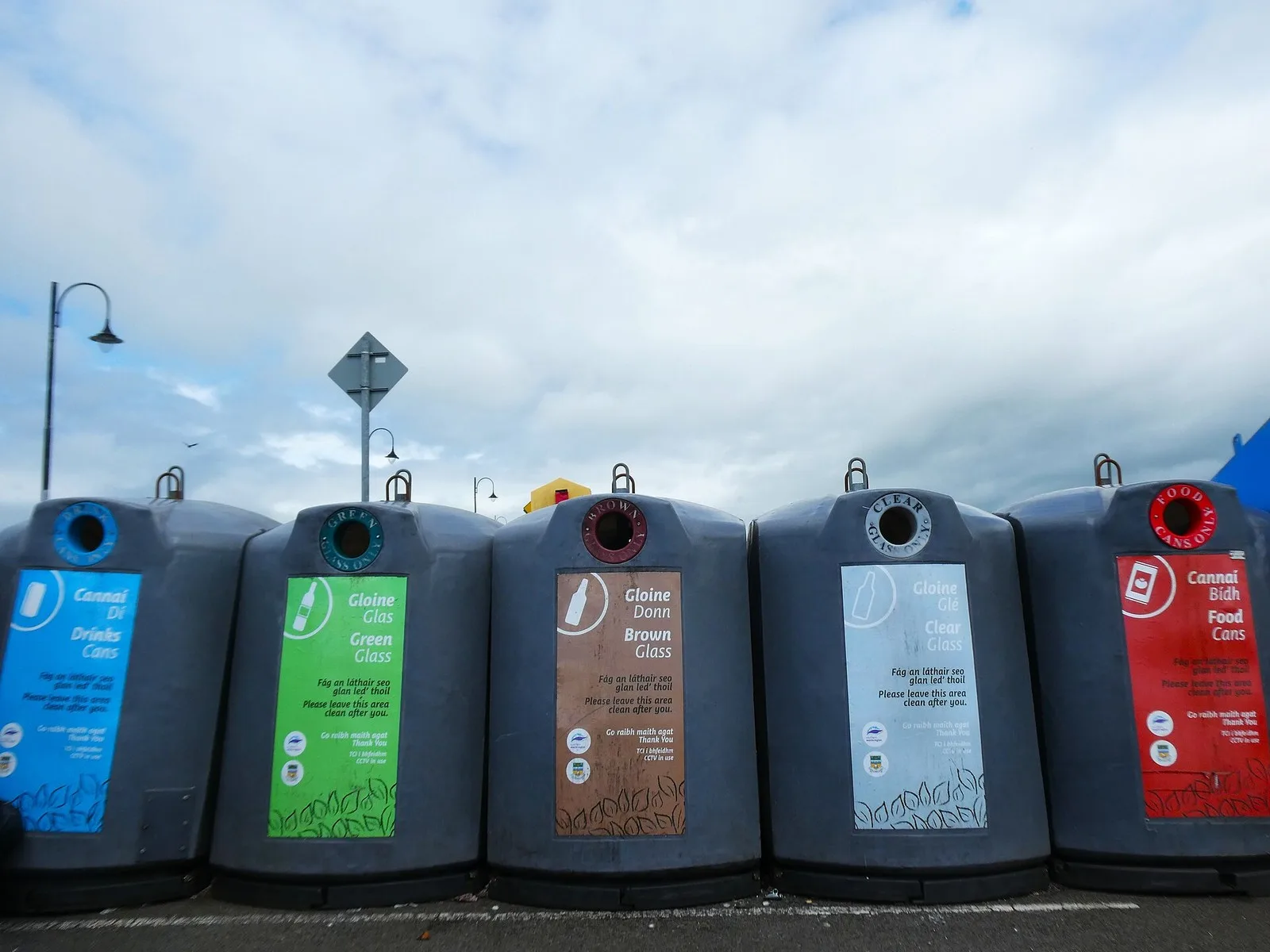
Ballymount recycling centre accepts listed household materials, with free recycling streams and charges for other loads. Check the official timetable, item list and vehicle restrictions before travelling. Booking, payment and holiday arrangements should be confirmed where the operator has not published them.
Ballymount recycling centre is a household waste facility at Ballymount Avenue, Greenhills (the council heading gives Dublin 12, while its contact block gives Dublin 20). Use this guide to decide whether your particular load belongs here, what should be separated before leaving home and which questions need an answer from the operator.
The information below was checked against live official pages as of November 2026. A recycling centre is not a promise that everything in a house clearance will be accepted: vehicle type, waste origin and the material itself all matter.
In this guide
- Where is the centre and who should use it?
- Opening hours, last entry and holiday closures
- Accepted items and charges: what will you pay?
- Booking, payment and proof of address
- Vehicle limits and safe unloading
- What you cannot bring, and where to take it instead
- A practical loading plan for this site
- Compare nearby facilities before you travel
- Common questions
- Official sources
Where is the centre and who should use it?
The official location is Ballymount Avenue, Greenhills (the council heading gives Dublin 12, while its contact block gives Dublin 20). The council lists the facility telephone as 01-4621251 and says Starrus Eco Holdings Limited operates the site on its behalf.
The council describes its domestic-waste disposal service as serving householders who do not use a door-to-door collection service. Ask the operator how that condition applies to your load.
Ballymount has a one-way system. The discrepancy between the postal districts on the council page is a reason to use the street and site name when checking directions, rather than selecting a destination solely by district.
If you have recently moved, distinguish your own household clear-out from waste removed by a trader. A household facility can restrict commercial or commercially collected waste even when it contains furniture, cardboard or other familiar domestic materials. Ask before paying a contractor to transport your load.
Opening hours, last entry and holiday closures
| Day | Hours | Important detail |
|---|---|---|
| Monday to Friday | 9am–5pm | Normal hours |
| Saturday | 9am–5.30pm | Normal hours |
| Sunday and bank holidays | 9.30am–5pm | Subject to named closures |
| Christmas Eve and New Year’s Eve | 9am–3pm | Shortened hours |
| Christmas Day, St Stephen’s Day, New Year’s Day | Closed | Overrides normal timetable |
The bank-holiday row is part of the published timetable, but a specific closure or exceptional weather notice can override it. Leave enough time to separate materials and unload without rushing.
No separate summer/winter schedule is published in the reviewed facility information. Do not copy seasonal times from a third-party listing. Ballymount explicitly names its Christmas and New Year exceptions above. Do not substitute ordinary bank-holiday hours on the named closed days.
Accepted items and charges: what will you pay?
The fee depends on the material stream and the vehicle category. Tell the attendant about the whole load before unloading, including anything that might attract an additional charge. A charge for bulky waste does not turn a refused material into an accepted one.
| Load or item | Published charge |
|---|---|
| Car: green waste only | €9.50 |
| Car and trailer: green waste only | €30 |
| Car: general waste | €15 |
| Car van / estate car / Jeep: general waste | €21 |
| Car and single-axle trailer: general waste | €42 |
| Small van / medium van / large van | €42 / €60 / €84 |
| Mattress | €35 each, plus appropriate gate fee |
| Household hazardous waste and engine oils | Additional €5, plus applicable vehicle gate fee |
Free-listed streams include cardboard, paper, glass bottles and jars, aluminium beverage cans, plastic bottles, qualifying plastic bags, textiles, domestic printer ink cartridges, household and car batteries, domestic electrical equipment, fluorescent tubes, light bulbs, domestic Calor gas bottles and polystyrene. Chargeable streams include scrap metal, timber, green waste, general household waste, furniture, household hazardous waste, plasterboard and homeowner-generated DIY waste.
The page puts engine oil in its free-material table but also explicitly applies an additional charge to engine oils under household hazardous waste. Treat that as a published inconsistency and ask the entrance staff for the total before unloading. Vehicles and trailers are described as charged separately; confirm how that note interacts with the combined-load rows for your actual vehicle.
Booking, payment and proof of address
The reviewed Ballymount page does not publish a booking requirement or a general proof-of-address rule. That is not confirmation that every arrival can be admitted. Contact the operator if you are travelling from another council area, using a borrowed van or bringing an unusual quantity.
Ballymount explicitly accepts credit cards, debit cards and cash. Ask for the assessed charge before unloading when your load includes a mattress, hazardous containers or a mixture of chargeable streams.
Keep the disposal receipt. It gives you a record of using an authorised facility and helps distinguish legitimate household disposal from an unverified collection arrangement. If you need evidence for waste-management queries, retain it with any collection-service documents rather than relying on a photograph of the gate.
Vehicle limits and safe unloading
Ballymount limits small vans to a maximum volume of 3.4m³ and medium vans to 5.8m³, excluding high-roof vehicles in those categories. Its page lists a large-van category but does not state a numeric volume there; do not import a larger limit from an old leaflet. Medium and large vans carrying items on the roof are refused.
Medium and large vans at Ballymount are only accepted for bulky household items and WEEE. Children must remain in the vehicle. If you need help depositing waste, the council asks you to tell the entrance staff so assistance can be assigned.
Pack each waste stream so it can be reached without emptying unrelated material onto the ground. Keep loose glass contained, protect yourself from sharp edges and follow staff directions about the correct bay. If you cannot unload safely, discuss the difficulty before attempting a lift.
What you cannot bring, and where to take it instead
Ballymount refuses soil, commercial or commercially collected waste, non-household hazardous waste and household hazardous waste in unlabelled containers. Its DIY entry excludes asbestos. Use an authorised collector or specialist facility that explicitly accepts the waste, and do not mix soil into a rubble load.
Use MyWaste’s waste services locator to find a service for the actual item, then ask that service about quantity, packaging and charges. A bring bank for glass or clothes cannot take a mixed bulky load. Never leave refused waste outside a centre or alongside a recycling container.
For chemicals, retain the original label where possible and keep different products separate. MyWaste explains that only certain household hazardous wastes are accepted at many centres. If a container is leaking, unlabelled or has an unknown substance inside, obtain handling instructions before transporting it. Do not pour the contents into drains or transfer them into food containers.
A practical loading plan for this site
At Ballymount, use the council’s site layout to load in drop-off order for the one-way system. Keep plasterboard available for its dedicated skip, and do not bury labelled hazardous containers under furniture where the attendant cannot assess them.
Before dismantling furniture, consider whether it could be reused in sound condition. Contact a charity or reuse service first; do not arrive with a donation that has not been accepted. Broken, incomplete or heavily soiled goods may need a waste route instead of reuse.
Make a simple inventory: material, approximate amount, vehicle and any awkward item. Use it when contacting the operator so the answer covers the full visit. On arrival, ask about any unlisted item before dropping it into a container; contamination can make a carefully sorted load harder to recover.
Compare nearby facilities before you travel
Compare your load with Coolmine recycling centre, Estuary recycling centre, Ballymun recycling centre. Read the recycling centres hub before choosing a different council area: acceptance and charges can change at the boundary.
Ballymun and Ballymount have different charges, accepted lists and Sunday arrangements. Compare the actual item as well as the distance: a free stream at one site may be charged at the other, and a larger vehicle may face different restrictions.
For routine packaging, your authorised household recycling service or a suitable local bring bank may save a bulky-waste trip. Check the stream label rather than treating all plastics, glass or textiles as interchangeable. If you choose a paid collector, verify the service is authorised for the material you are handing over.
Common questions
Do I need to book?
The reviewed facility information does not publish a booking requirement. Confirm directly before a specialist or unusually large delivery; silence is not a guarantee of entry.
Is all recycling free?
No. Listed household recyclables may be free, while bulky items, garden waste and other streams can attract charges. Keep these materials separate and check the relevant site table.
Can I bring waste from my business?
These guides concern household services. Commercial waste restrictions apply even when the material resembles domestic recycling; arrange an authorised commercial service instead.
Should I bring proof of address?
The reviewed pages do not specify a general proof-of-address rule. Ask the operator about your circumstances, especially if travelling from another council area.
What if my item is not listed?
Contact the facility with the material, quantity and vehicle details. Use the MyWaste locator for an appropriate alternative rather than leaving waste outside the gate.
Can holiday opening times change?
Yes. Check the council notice immediately before travelling, especially around Christmas and during severe weather. A normal weekly timetable does not override a temporary closure.
Official sources
- South Dublin County Council: Ballymount civic amenity — Fetched live Thursday 12 November 2026
- Fingal County Council: recycling centres — Fetched live Thursday 12 November 2026
- MyWaste: household hazardous waste — Fetched live Thursday 12 November 2026
General information only. This independent guide is not from an Irish council or facility operator. Opening status, acceptance and charges can change; confirm the official information before travelling.