Estuary recycling centre: plan your visit
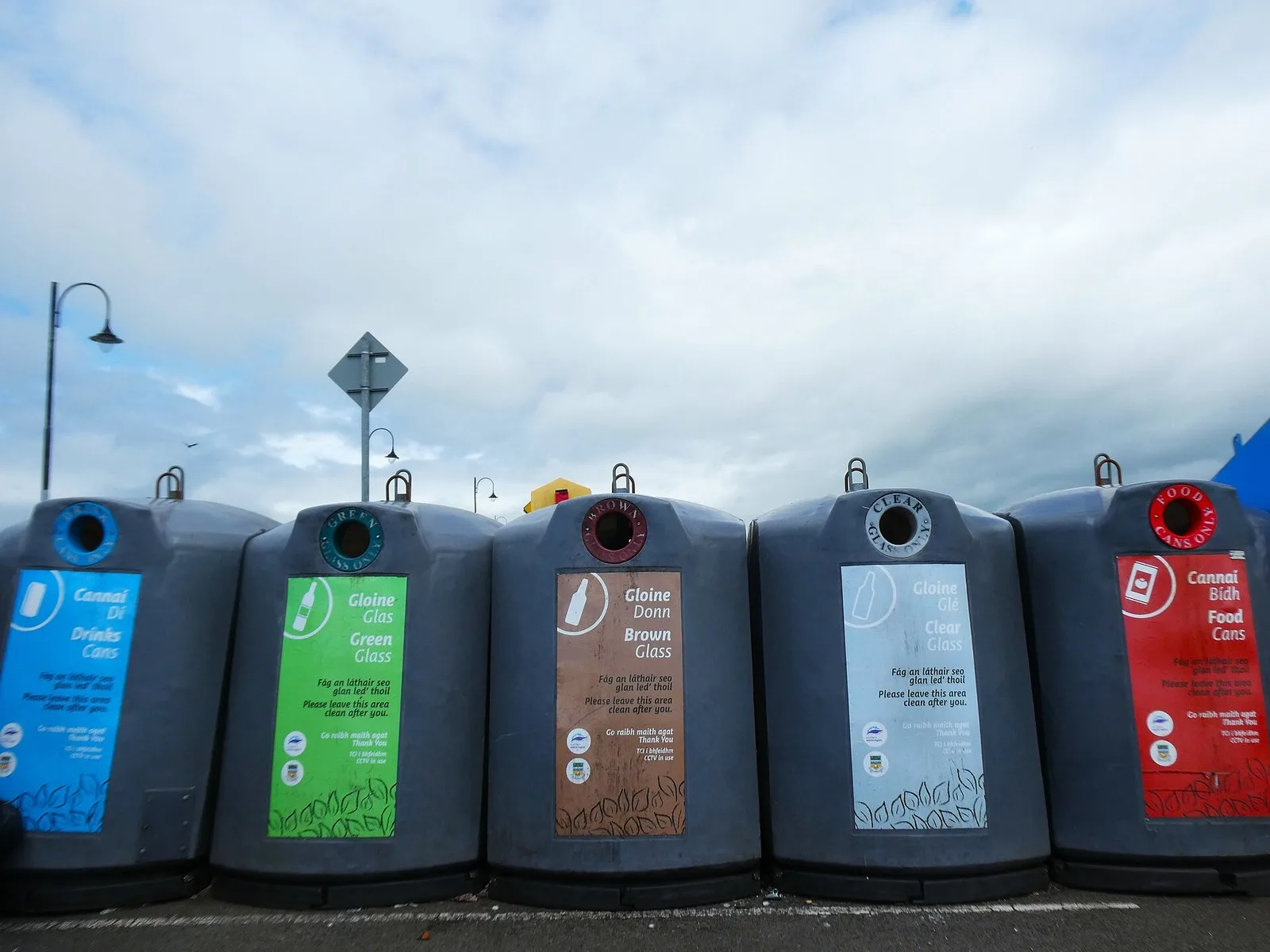
Estuary recycling centre accepts listed household materials, with free recycling streams and charges for other loads. Check the official timetable, item list and vehicle restrictions before travelling. Fingal publishes weekday and Saturday opening, with closure on Sundays and bank holidays. Allow time for safe unloading.
Estuary recycling centre is a household waste facility at Swords, beside Swords Business Park. Use this guide to decide whether your particular load belongs here, what should be separated before leaving home and which questions need an answer from the operator.
The information below was checked against live official pages as of November 2026. A recycling centre is not a promise that everything in a house clearance will be accepted: vehicle type, waste origin and the material itself all matter.
In this guide
- Where is the centre and who should use it?
- Opening hours, last entry and holiday closures
- Accepted items and charges: what will you pay?
- Booking, payment and proof of address
- Vehicle limits and safe unloading
- What you cannot bring, and where to take it instead
- A practical loading plan for this site
- Compare nearby facilities before you travel
- Common questions
- Official sources
Where is the centre and who should use it?
The official location is Swords, beside Swords Business Park. Fingal County Council lists the service contact as (01) 890 5000.
Estuary is the Fingal option beside Swords Business Park. Do not confuse a nearby unattended bring bank with the staffed recycling centre; the accepted materials and access arrangements differ.
If you have recently moved, distinguish your own household clear-out from waste removed by a trader. A household facility can restrict commercial or commercially collected waste even when it contains furniture, cardboard or other familiar domestic materials. Ask before paying a contractor to transport your load.
Opening hours, last entry and holiday closures
| Day | Hours | Important detail |
|---|---|---|
| Monday to Friday | 8am–8pm | Last vehicle entry 7.30pm |
| Saturday | 8am–6pm | Last vehicle entry 5.30pm |
| Sunday and bank holidays | Closed | Do not travel |
Fingal distinguishes closing time from last vehicle entry. Arriving before the gates close is not enough if the admission cut-off has already passed. Its page also warns that bad weather can cause closures for health and safety.
The live council page publishes the normal timetable above. Check Fingal’s live status before travelling, because temporary notices can override normal hours.
Accepted items and charges: what will you pay?
The fee depends on the material stream and the vehicle category. Tell the attendant about the whole load before unloading, including anything that might attract an additional charge. A charge for bulky waste does not turn a refused material into an accepted one.
| General or bulky waste vehicle | Published charge |
|---|---|
| Car boot | €12 |
| Full car / Jeep / SUV | €30 |
| Car van / car plus trailer | €50 |
| Intermediate / Transit van | €128 |
| Green waste vehicle | Published charge |
|---|---|
| Car boot | €6 |
| Full car / Jeep / SUV | €10 |
| Car van / car plus trailer | €35 |
| Intermediate / Transit van | €80 |
The free list includes paper, cardboard, cartons, tins and cans, glass bottles and jars, plastic bottles, clean plastic packaging, clothes, household electrical equipment, fluorescent tubes, energy-saving bulbs, household and car batteries, and cooking and engine oil. Fingal asks for plastic bottles to be washed and squashed with tops removed.
Chargeable materials include furniture, carpet, mattresses, wood, metal, green waste, soil and stones, duvets, pillows and household hazardous waste such as paint, herbicides and cleaners. The council does not publish a separate per-mattress or per-paint-container tariff on this page; do not substitute another council’s item fee.
Booking, payment and proof of address
The reviewed Fingal page does not publish a booking requirement or a general proof-of-address rule. That is not confirmation that every arrival can be admitted. Contact the operator if you are travelling from another council area, using a borrowed van or bringing an unusual quantity.
Fingal explicitly accepts debit and credit cards. The reviewed page does not confirm cash acceptance, so arrange a suitable payment method before setting off with chargeable materials.
Keep the disposal receipt. It gives you a record of using an authorised facility and helps distinguish legitimate household disposal from an unverified collection arrangement. If you need evidence for waste-management queries, retain it with any collection-service documents rather than relying on a photograph of the gate.
Vehicle limits and safe unloading
Fingal’s tariff lists cars, car vans, trailers and intermediate/Transit vans, but the page does not publish dimensional limits. Describe the actual vehicle and load when asking for access; a price category is not blanket permission for commercial deliveries. Household refuse and commercial waste are not accepted.
Staff at the Fingal centres are not permitted to help lift items, public toilets are unavailable, and the council asks visitors to avoid bringing children. Arrange safe lifting help before loading furniture or heavy electrical equipment.
Pack each waste stream so it can be reached without emptying unrelated material onto the ground. Keep loose glass contained, protect yourself from sharp edges and follow staff directions about the correct bay. If you cannot unload safely, discuss the difficulty before attempting a lift.
What you cannot bring, and where to take it instead
Fingal explicitly refuses household refuse and commercial waste. Bagged ordinary rubbish needs an authorised household collection or another authorised facility that confirms it accepts domestic refuse. For business waste, use an authorised commercial collector rather than disguising the load as a household delivery.
Use MyWaste’s waste services locator to find a service for the actual item, then ask that service about quantity, packaging and charges. A bring bank for glass or clothes cannot take a mixed bulky load. Never leave refused waste outside a centre or alongside a recycling container.
For chemicals, retain the original label where possible and keep different products separate. MyWaste explains that only certain household hazardous wastes are accepted at many centres. If a container is leaking, unlabelled or has an unknown substance inside, obtain handling instructions before transporting it. Do not pour the contents into drains or transfer them into food containers.
A practical loading plan for this site
Keep free recyclables separate from the bulky or green-waste part of a Fingal load. In particular, do not treat oil as a general liquid disposal service: the council’s free list names cooking and engine oil, while paint and cleaners appear under chargeable household hazardous waste.
Before dismantling furniture, consider whether it could be reused in sound condition. Contact a charity or reuse service first; do not arrive with a donation that has not been accepted. Broken, incomplete or heavily soiled goods may need a waste route instead of reuse.
Make a simple inventory: material, approximate amount, vehicle and any awkward item. Use it when contacting the operator so the answer covers the full visit. On arrival, ask about any unlisted item before dropping it into a container; contamination can make a carefully sorted load harder to recover.
Compare nearby facilities before you travel
Compare your load with Coolmine recycling centre, Ballymun recycling centre, Ballymount recycling centre. Read the recycling centres hub before choosing a different council area: acceptance and charges can change at the boundary.
Coolmine and Estuary share Fingal’s published material and tariff rules. Changing between them can help with location, but it does not turn a refused household-refuse load into an accepted one or resolve a council-wide disruption. Confirm status at the destination itself.
For routine packaging, your authorised household recycling service or a suitable local bring bank may save a bulky-waste trip. Check the stream label rather than treating all plastics, glass or textiles as interchangeable. If you choose a paid collector, verify the service is authorised for the material you are handing over.
Common questions
Do I need to book?
The reviewed facility information does not publish a booking requirement. Confirm directly before a specialist or unusually large delivery; silence is not a guarantee of entry.
Is all recycling free?
No. Listed household recyclables may be free, while bulky items, garden waste and other streams can attract charges. Keep these materials separate and check the relevant site table.
Can I bring waste from my business?
These guides concern household services. Commercial waste restrictions apply even when the material resembles domestic recycling; arrange an authorised commercial service instead.
Should I bring proof of address?
The reviewed pages do not specify a general proof-of-address rule. Ask the operator about your circumstances, especially if travelling from another council area.
What if my item is not listed?
Contact the facility with the material, quantity and vehicle details. Use the MyWaste locator for an appropriate alternative rather than leaving waste outside the gate.
Can holiday opening times change?
Yes. Check the council notice immediately before travelling, especially around Christmas and during severe weather. A normal weekly timetable does not override a temporary closure.
Official sources
- Fingal County Council: recycling centres — Fetched live Thursday 12 November 2026
- Dublin City Council: bring and recycling centres — Fetched live Thursday 12 November 2026
- MyWaste: household hazardous waste — Fetched live Thursday 12 November 2026
General information only. This independent guide is not from an Irish council or facility operator. Opening status, acceptance and charges can change; confirm the official information before travelling.