Recycling centres in Dublin and Ireland
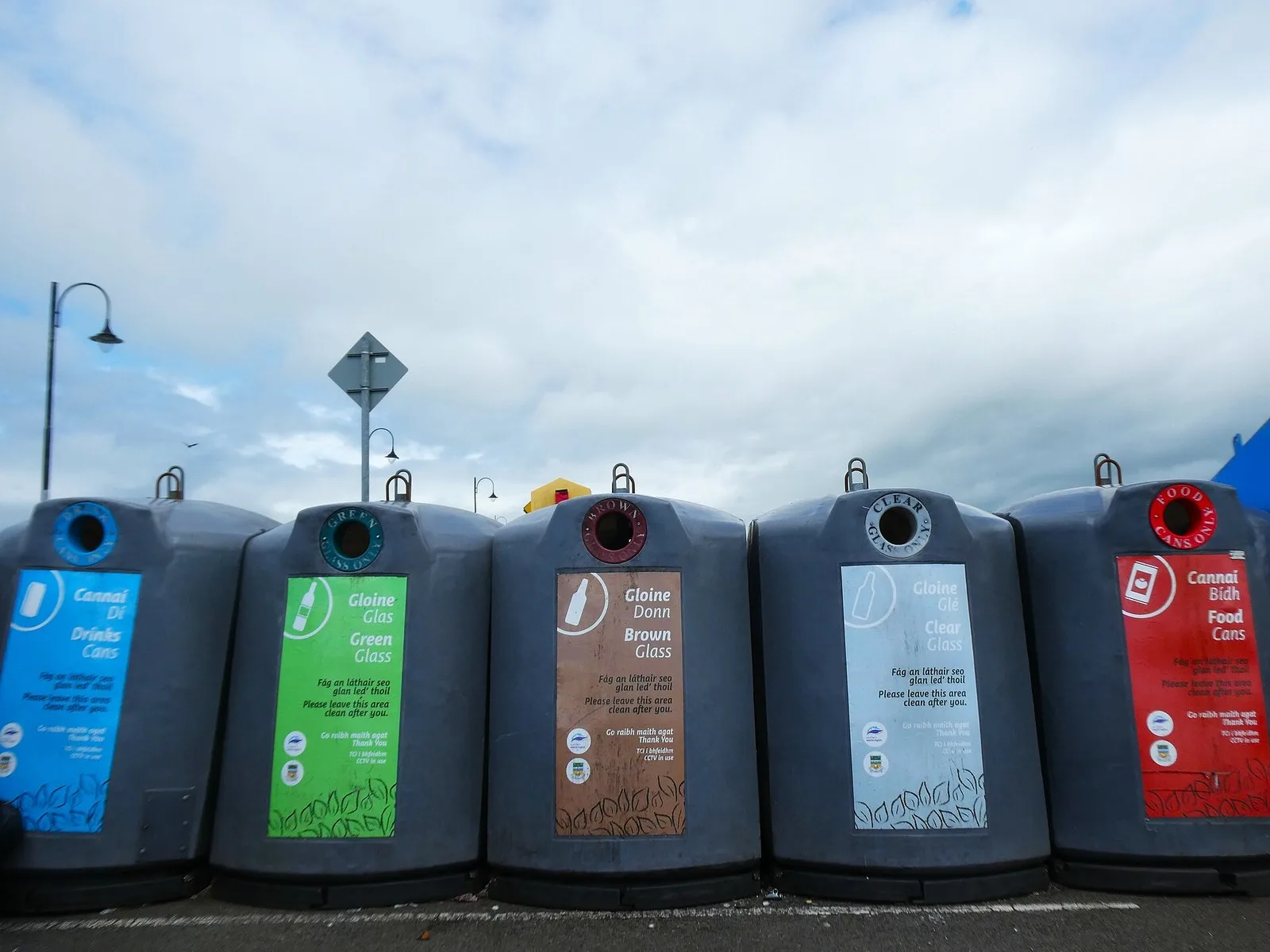
Dublin recycling centres accept specified household materials, with free streams and charges for bulky or other waste. Compare Coolmine, Estuary, Ballymun and Ballymount by item, vehicle and opening status. Check the operator before travelling: fees, Sunday opening, holiday closures and access restrictions differ, and temporary notices can override normal hours.
A civic amenity site is a staffed place to bring household materials for recycling or authorised disposal. It usually accepts a wider range than an unattended bring bank, but its own item list determines what can go in each container. Use this Dublin comparison to choose a service for the waste you actually have.
This pilot covers Coolmine and Estuary in Fingal, Ballymun in Dublin City and Ballymount in South Dublin. Official information was fetched live as of November 2026. The nearest gate is not always the right destination: opening status, vehicle restrictions, surcharges and refused materials can decide whether a trip is worthwhile.
In this guide
- Compare the Dublin recycling centres
- How does a civic amenity site work?
- What is free, and what attracts a charge?
- Do you need a booking or proof of address?
- Can you use a van or trailer?
- What you cannot bring, and where to take it instead
- Prepare a load that is easy to unload safely
- Keep records and check the final details
- Common questions
- Official sources
Compare the Dublin recycling centres
| Facility | Location and usual hours | Charges and limitations |
|---|---|---|
| Coolmine | Coolmine Industrial Estate, Dublin 15. Weekdays 8am–8pm; Saturday 8am–6pm; last entry earlier. | Car boot bulky load €12; full car €30. Closed Sundays and bank holidays. Confirm status. |
| Estuary | Swords, beside Swords Business Park. Same published weekly hours as Coolmine. | Same Fingal tariffs; household refuse not accepted. Confirm status. |
| Ballymun | Carton Way, D11 XH7P. Monday–Wednesday 9am–5pm; Thursday–Friday 9am–6pm; Saturday/bank holidays 9am–4pm. | Car charge €21; estate/Jeep/SUV €28. Sunday closed; full large/commercial vans refused. |
| Ballymount | Ballymount Avenue, Greenhills. Weekdays 9am–5pm; Saturday 9am–5.30pm; Sunday/bank holidays 9.30am–5pm. | General-waste car €15; estate/Jeep/car van €21. Mattress €35 extra; named holiday closures. |
Fingal’s last vehicle entry is 7.30pm on weekdays and 5.30pm on Saturday. The live Fingal page publishes normal hours. Check current council notices before travelling, as temporary closures can override the timetable.
Ballymount shortens Christmas Eve and New Year’s Eve to 9am–3pm and closes on Christmas Day, St Stephen’s Day and New Year’s Day. Its heading gives Dublin 12 while its contact block gives Dublin 20, so check the street and facility name when planning the route. No separate seasonal schedule was published in the other reviewed facility information.
How does a civic amenity site work?
Arrive with household materials sorted by type, tell the entrance staff what is in the vehicle and follow directions to the correct bays. Some items are free-listed; others require a gate or item charge. Staff may refuse materials that the facility is not authorised or equipped to handle, even if you are willing to pay.
A bring bank is different. It commonly has containers for particular materials, such as bottles or clothing, without the range of a staffed centre. The presence of a glass bank does not make the surrounding ground a collection point for furniture, bagged waste or electrical appliances. Check the label and take away anything the bank cannot accept.
For newcomers, a useful starting point is the MyWaste waste services locator. Search for the waste type and location, then read the actual operator’s conditions. General recycling advice explains the process, but it cannot override a facility’s local restrictions or a temporary closure notice.
What is free, and what attracts a charge?
The reviewed centres list common household recyclables and electrical items as free streams, alongside charged materials. Paper, cardboard, glass bottles and jars, specified plastics, domestic batteries and household electrical equipment appear in the reviewed lists. Check the individual guide before assuming an item qualifies: the exact material and whether it is domestic matter.
Bulky furniture, garden waste, timber and other difficult streams can attract charges. The charging basis may be a vehicle category, a bag or caddy size, or an additional fee for a particular item. Sorting free materials away from the paid portion makes your load easier to assess, but it does not guarantee that a mixed load will be charged in a particular way.
Important differences include oil and polystyrene. Fingal lists cooking and engine oil as free; Ballymun lists them with a charge. Ballymun also charges for polystyrene while Ballymount places it in the free list. Ballymount’s engine-oil information conflicts internally: it appears in the free table and in a hazardous-waste surcharge rule. Confirm that price with entrance staff.
Do not compare only the headline car rate. Ballymount charges an additional €35 per mattress on top of the appropriate gate fee and lists an additional €5 for household hazardous waste and engine oils. Ballymun limits mattresses to 2 per load but does not publish a separate mattress price in its reviewed leaflet.
Do you need a booking or proof of address?
The facility information reviewed for this guide does not publish a general booking requirement or a universal proof-of-address rule. We have not turned that silence into a promise of unrestricted walk-in access. Contact the destination for unusually large loads, specialist materials or a vehicle whose category is unclear.
South Dublin County Council describes Ballymount’s domestic-waste disposal service as serving householders who do not use a door-to-door collection service; ask the operator how that condition applies to your load.
If you are crossing a council boundary, ask about eligibility before driving. Give the operator your household location, the waste type and the vehicle. That is more useful than asking whether the centre is simply “open”, because an operating site can still refuse your particular load.
Payment arrangements also vary. Fingal explicitly states debit and credit cards. Ballymount explicitly accepts credit cards, debit cards and cash. Ballymun’s reviewed leaflet does not specify payment methods, so check with Dublin City Council before arriving with chargeable items. Do not assume that an arrangement at another Dublin site carries across.
Can you use a van or trailer?
A van in a fee table is not blanket permission for a commercial load. All these guides concern household disposal, and commercial-waste restrictions apply. Ballymun explicitly refuses full large or commercial vans. Fingal lists intermediate/Transit vans in its tariffs but does not publish dimensions on the reviewed page; confirm the actual vehicle and load.
Ballymount gives more detailed conditions. Small vans have a maximum volume of 3.4m³ and medium vans 5.8m³, with high-roof vehicles excluded in those categories. Medium and large vans are accepted only for bulky household items and WEEE, and roof-carried items on those vehicles cause refusal. Vehicles above the specified sizes are also refused.
The live Ballymount page lists a large-van rate without a numeric volume limit there, so an older information sheet should not be treated as current permission for a particular large van. It also says vehicles and trailers are charged separately while listing combined-load rows. Ask for the assessment for your own combination before hiring a trailer or loading it.
What you cannot bring, and where to take it instead
Fingal refuses household refuse and commercial waste. Ballymun names tyres, oil tanks, petrol, diesel and asbestos on its refusal list. Ballymount refuses soil, commercial or commercially collected waste, non-household hazardous waste and unlabelled household hazardous containers; its homeowner DIY stream excludes asbestos. These are practical differences, not interchangeable descriptions of a universal dump service.
For a refused item, use MyWaste’s locator to identify an authorised service that explicitly accepts it. Contact the facility or collector before moving the waste. Do not transfer chemicals into an unmarked container or mix soil with rubble to make it look acceptable. A general household site is not automatically a substitute for a specialist service.
For chemicals, MyWaste’s household hazardous waste guidance says many centres take certain household hazardous materials, so acceptance must be checked. Keep labels intact and products separate. If you cannot identify the substance or the container is damaged, obtain handling advice before transporting it rather than experimenting with disposal.
For ordinary household rubbish, use an authorised household collection or a facility that confirms it accepts domestic refuse. For business waste or a contractor’s clearance, arrange an appropriate authorised commercial service. Never leave a refused load at a closed gate, next to a bring bank or in a public space.
Prepare a load that is easy to unload safely
Write down what is leaving the house before you start packing. Separate packaging, electrical items, garden material, bulky furniture and labelled household chemicals. Keep small batteries and fragile lamps secure rather than loose among heavy objects, and make each stream accessible without having to empty the whole vehicle onto the ground.
Consider reuse before recycling. A sound table, functioning appliance or usable household object might suit a charity or reuse service, but contact the recipient first. Donation is an agreed handover, not permission to leave something outside a closed premises. If an item is broken or heavily soiled, ask about an appropriate waste route instead.
Unloading arrangements vary. Fingal says staff cannot assist with lifting, asks visitors to avoid bringing children and has no public toilets. Ballymun requires children to be under adult care and dogs on leads. Ballymount requires children to remain in the vehicle and asks anyone needing unloading assistance to tell entrance staff so help can be assigned.
Ballymount operates a one-way system and recommends loading by material in the order of the drop-off points shown on its layout. At every site, follow staff instructions and ask before placing an unfamiliar object in a skip. Stop if you cannot lift or carry something safely; the trip is not a reason to attempt an unsafe manoeuvre.
Keep records and check the final details
Retain disposal receipts with collection-service records so you have a clear account of where your waste went. A cash payment to an unknown collector is not the same evidence as verified authorised disposal.
Before setting off, check the live council notice, not only a map listing or saved screenshot. Confirm the destination accepts the item, ask how the full load will be charged, check the vehicle rules and arrange a confirmed payment method. Around holidays or during severe weather, repeat the opening-status check close to departure.
Use the facility guides linked in the comparison table for more detail, including individual charges and questions to put to the operator. This hub is a starting point for choosing a route; it does not guarantee admission or fix a price where the official information is unclear. Where sources disagree, asking before you load is cheaper and easier than seeking an exception at the gate.
Explore recycling centres
Ballymount recycling centre
Official opening hours, charges, accepted items and access rules to check before you travel.
RecyclingBallymun recycling centre
Official opening hours, charges, accepted items and access rules to check before you travel.
RecyclingCoolmine recycling centre
Official opening hours, charges, accepted items and access rules to check before you travel.
RecyclingEstuary recycling centre
Official opening hours, charges, accepted items and access rules to check before you travel.
Common questions
Do I need to book?
The reviewed facility information does not publish a booking requirement. Confirm directly before a specialist or unusually large delivery; silence is not a guarantee of entry.
Is all recycling free?
No. Listed household recyclables may be free, while bulky items, garden waste and other streams can attract charges. Keep these materials separate and check the relevant site table.
Can I bring waste from my business?
These guides concern household services. Commercial waste restrictions apply even when the material resembles domestic recycling; arrange an authorised commercial service instead.
Should I bring proof of address?
The reviewed pages do not specify a general proof-of-address rule. Ask the operator about your circumstances, especially if travelling from another council area.
What if my item is not listed?
Contact the facility with the material, quantity and vehicle details. Use the MyWaste locator for an appropriate alternative rather than leaving waste outside the gate.
Can holiday opening times change?
Yes. Check the council notice immediately before travelling, especially around Christmas and during severe weather. A normal weekly timetable does not override a temporary closure.
Official sources
- Fingal County Council: recycling centres — Fetched live Thursday 12 November 2026
- Dublin City Council: bring and recycling centres — Fetched live Thursday 12 November 2026
- Dublin City Council: Ballymun September 2026 leaflet — Fetched live Thursday 12 November 2026
- South Dublin County Council: Ballymount civic amenity — Fetched live Thursday 12 November 2026
- MyWaste: household hazardous waste — Fetched live Thursday 12 November 2026
General information only. This independent guide is not from an Irish council or facility operator. Opening status, acceptance and charges can change; confirm the official information before travelling.